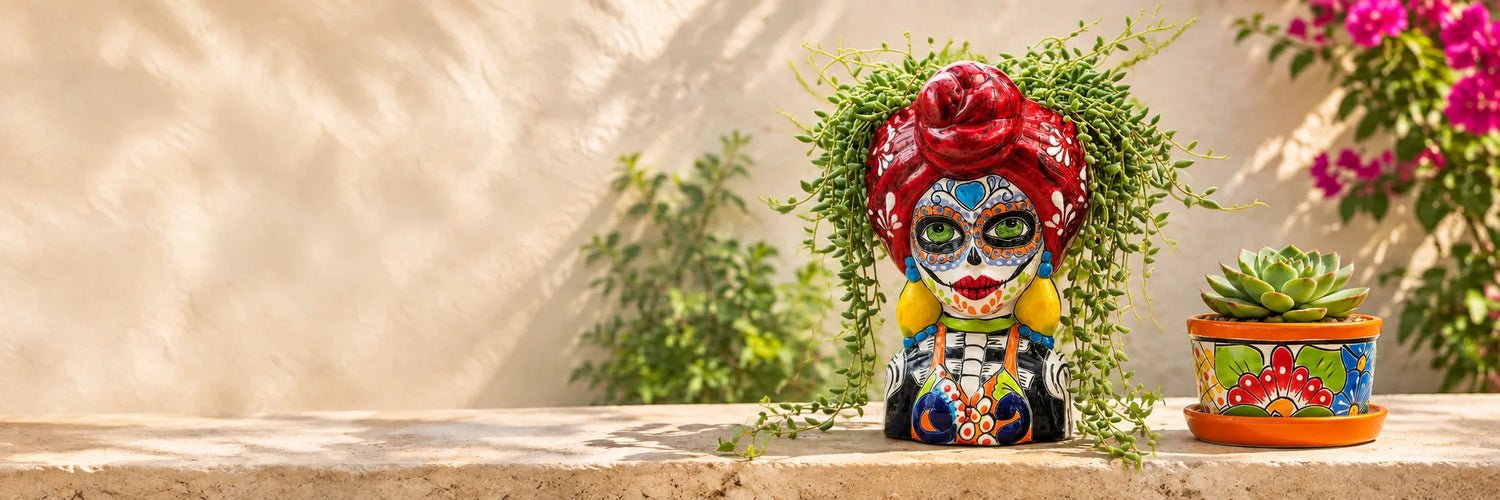
History, heritage, and the colorful ceramic art of Mexico.
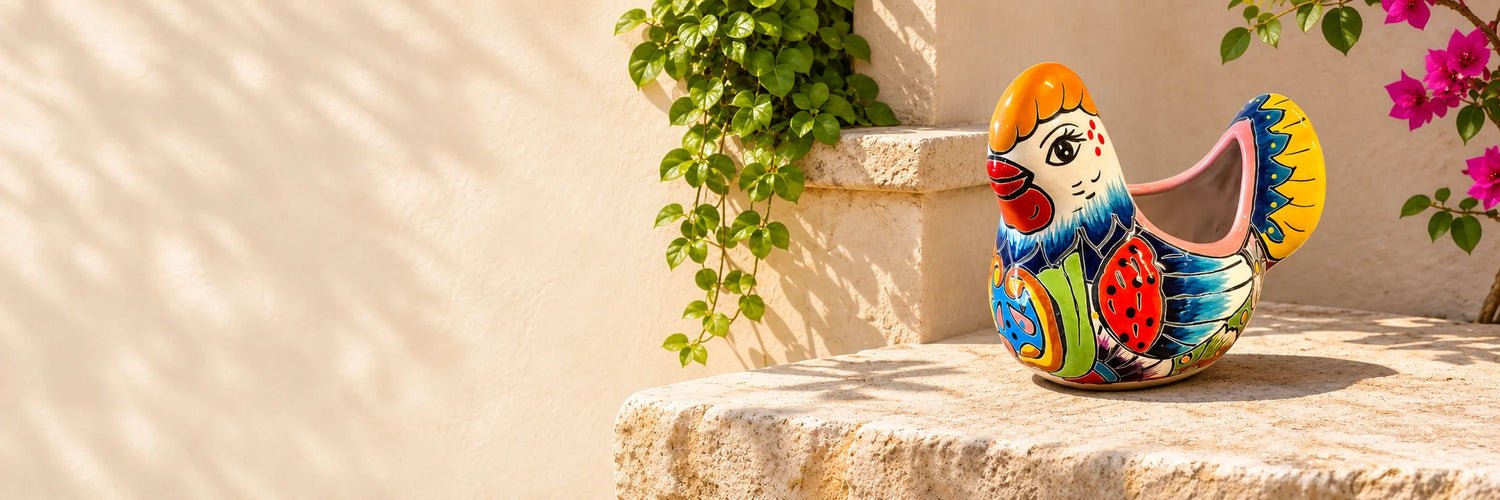
Hand-painted pottery, Mexico · Photograph from The Talavera Hub
❋
More than decoration
With its expressive motifs and luminous glazed surfaces, Talavera pottery carries a centuries-long story of cultural exchange and artisan skill. Traditional Talavera is closely associated with Puebla and Tlaxcala, Mexico. Its influence has also inspired a wide variety of colorful ceramics for homes and gardens. Understanding that distinction makes these objects even more interesting to collect, display, and enjoy.
Where it began
Talavera developed in central Mexico during the colonial period, when established local pottery traditions encountered European methods of glazing and shaping earthenware. Puebla became an important center for the craft. Its makers drew on Spanish ceramic practices, but also adapted patterns circulating through trade, including the blue-and-white porcelain admired from Asia. Over time, the resulting work gained a character distinctly associated with Puebla: practical vessels and architectural tiles with intricate, confident decoration.
How it is made
Traditional Talavera is a form of majolica, or tin-glazed earthenware. Craftspeople prepare clay, form vessels or tiles, let them dry, fire them, apply an opaque glaze, paint the decoration, and fire them again. Every stage depends on careful timing and knowledge of materials. UNESCO recognized the living making processes of artisan communities in Puebla and Tlaxcala, Mexico, and two Spanish ceramic centers in 2019—not merely a particular pattern or finished object.
ART FOR HOME & GARDEN
Color in many forms
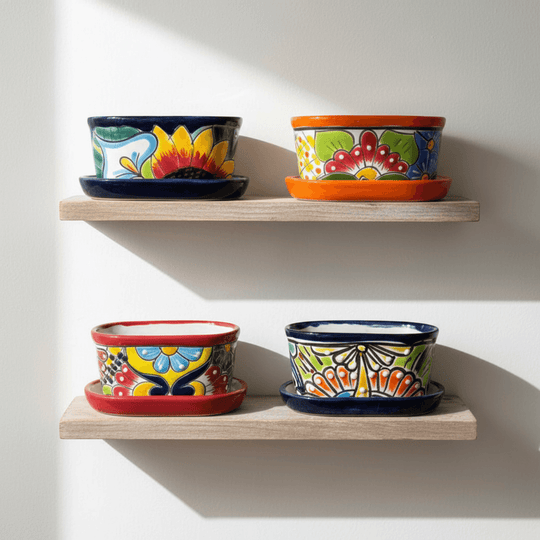
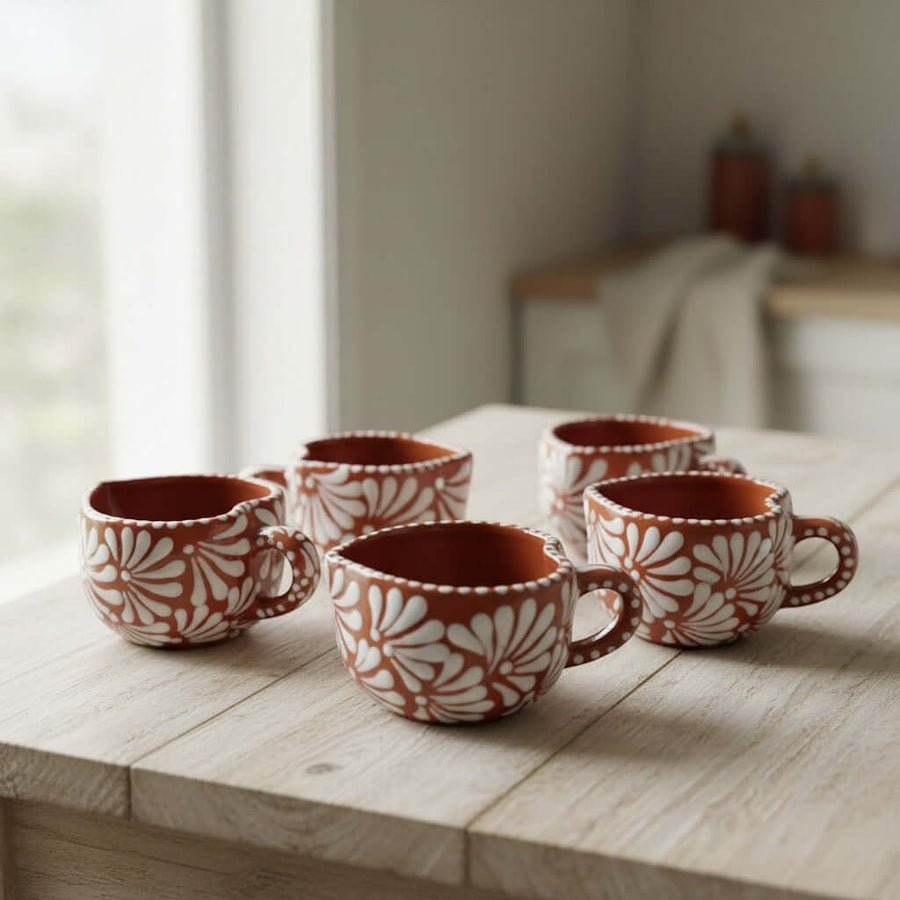
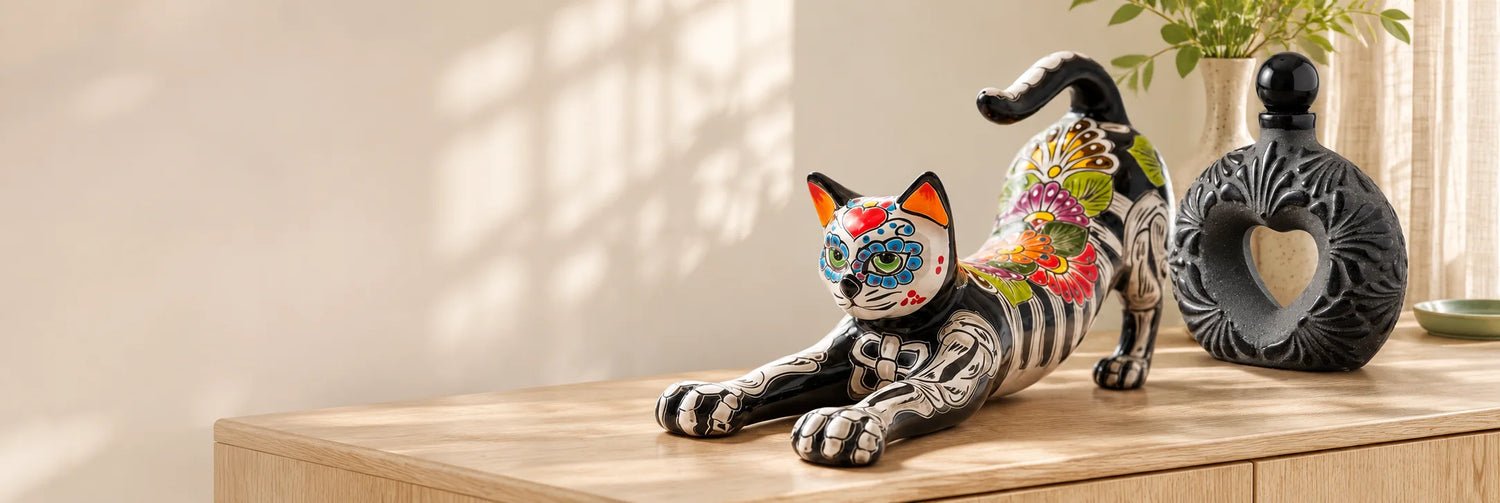
Traditional shapes and contemporary interpretations bring painted ceramics into everyday life.
PlantersTablewareDecorative figures
THE WORKSHOP
The journey from earth to ornament
A decorated piece begins long before the painter picks up a brush. Traditional workshops preserve knowledge learned through observation, repetition, and work alongside more experienced makers.
Prepare the clay
Clay is selected, combined, and worked until it has a consistent texture. Removing trapped air and adjusting moisture help the material hold its shape during drying and firing.
Shape and dry
A potter forms the object on a wheel or in a mold. The clay then dries gradually. Handles, rims, and decorative details require particular care while the piece is still fragile.
Glaze and paint
After an initial firing, an opaque glaze creates a pale ground for decoration. Artisans apply designs with practiced brushwork, allowing lines, floral shapes, and color to work together.
Return to the kiln
Another firing transforms the painted surface into the recognizable glazed finish. Heat, materials, and timing affect the result, which is why experienced kiln work matters as much as painting.
Workshops may divide these tasks among specialists, and methods differ by maker. What continues across generations is the relationship between skilled hands, local materials, and a body of knowledge that cannot be reduced to a factory pattern.
DESIGN & SYMBOL
Reading the colors and patterns
Blue-and-white pottery is one of Talavera's most familiar expressions. Cobalt-colored decoration stands out against a light glazed surface, while later pieces and related traditions use yellow, green, orange, black, and other tones. Flowers, leaves, curved borders, birds, and repeating geometry can all appear in painted ceramics.
These motifs tell a story of exchange rather than a single source. Puebla's potters worked within Mexican culture while responding to Spanish and Asian ceramic design. A repeating border may organize the edge of a plate; a central flower may make a bowl feel lively even when it is empty.
Look closely at the brushwork, the placement of a motif, and the balance of open space. Small variations can reveal the hand of the decorator, although appearance alone cannot prove where a piece was made.
AN IMPORTANT DISTINCTION
Talavera & Talavera-style
In a historical context, Mexican Talavera refers to a specific pottery tradition tied to Puebla and Tlaxcala. In shops and online listings, “Talavera-style” is also used for hand-painted pieces that share its vivid look but may come from other workshops or use different production methods.
Neither a bright color nor a familiar pattern confirms authenticity. If you are seeking certified traditional Talavera, ask for the workshop's name, place of production, and documentation. If you simply love a decorative planter or figure, the maker's craft, materials, and intended use still matter. Both kinds of pottery can be appreciated without confusing their origins.
ART IN EVERYDAY PLACES
From the table to the courtyard
Painted ceramics have long served practical and decorative purposes. In Puebla, historic tiles became part of building facades and interiors, while jars, bowls, and plates brought craftsmanship into kitchens and dining rooms. Contemporary pottery continues that relationship between useful objects and art.
Today, a glazed pot may hold a plant, a wall tile may add character to an entryway, and a decorative figure may become a favorite object on a shelf. The best placement lets the piece be seen and enjoyed while respecting what it was actually made to do.
A LIVING CULTURAL HERITAGE
Why the tradition still matters
Talavera is part of the visual history of Puebla. Glazed tiles helped give buildings distinctive surfaces, while decorated vessels appeared in household life. These objects are practical records of taste, trade, and craftsmanship. A plate can suggest how people ate or entertained; a tiled wall can tell us what a community valued in its shared spaces. Looking at the pottery in this wider setting helps explain why it is more than an attractive souvenir.
Its designs also remind us that cultures have never been isolated. The Met's account of Pueblan ceramics describes the influence of Chinese export porcelain arriving through trade routes from Asia, alongside Spanish pottery practices. Mexican makers brought those ideas into their own workshops. The result was not a single borrowed style, but a developing artistic language shaped by place, materials, and generations of creativity.
The tradition is still alive because people continue to teach it. In workshops, a beginner may first learn to prepare materials or repeat a border before mastering a complicated painted composition. Skills such as controlling moisture or judging a kiln cannot be learned from photographs alone. They develop with practice, often under the guidance of family members or established artisans.
That is why UNESCO's recognition focuses on the knowledge and processes of making the pottery. Protecting a craft means supporting the people who practice it, not only admiring finished pieces. When you buy pottery thoughtfully, you can ask who made it, where it came from, and whether the seller can explain its materials and use. Curiosity is a small but meaningful way to appreciate the work. Looking at a piece can be part of that appreciation. Follow the painted border, notice how the colors meet the glaze, and imagine the decisions made at each stage of its journey from clay to kiln.
A THOUGHTFUL BUYER'S GUIDE
Choosing and caring for pottery
Ask about purpose
Before ordering, check the dimensions and whether the object is intended for food, flowers, plants, or display. Never assume that decorative pottery is food-safe, oven-safe, or suitable for cooking. The product description or maker should confirm those uses.
Consider the setting
A planter needs the right space, drainage arrangement, and protection for nearby furniture. Outdoor pieces may be vulnerable to freezing conditions or prolonged weather exposure. If a pot lacks a drainage hole, use a removable inner container when practical.
Handle with care
For most decorative pieces, a soft cloth and gentle hand washing are sensible starting points. Avoid abrasive scrubbers, sudden temperature changes, and harsh cleaning products unless the maker recommends them. Follow the individual object's care instructions over general advice.
Look at the details
Review photographs of the actual design, including its base, rim, and painted finish. Slight differences between hand-decorated pieces may be part of their character, but damage, cracks, and manufacturing flaws should be described accurately by the seller.
COMMON QUESTIONS
A few things worth knowing
Is all colorful Mexican pottery Talavera?
No. Mexico has many ceramic traditions, and the term is also used informally for a decorative style. Origin and production methods make the difference.
Does UNESCO certify individual pieces?
No. Its 2019 recognition concerns traditional knowledge and making processes shared by communities in Mexico and Spain. It is not a label placed on every item sold as Talavera.
Can Talavera-style pottery be handmade?
Yes. A piece may be shaped or decorated by hand without belonging to the certified traditional Talavera category. Ask the seller how it was produced.
CONTINUE LEARNING
Explore the tradition
For a deeper account of the heritage and techniques, these introductions are useful starting points.